
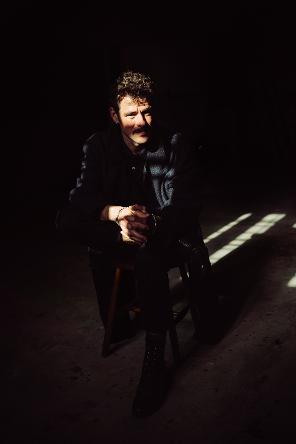
BIOGRAPHY
Julius Gabriel is a saxophonist, composer, and improviser working across solo performance, collaborative projects, and large ensembles.
Born in East Berlin in 1988, he began playing saxophone at the age of ten. He was a member of the Berlin Youth Jazz Orchestra and also worked closely with Gunter Hampel, who became an early mentor. He studied jazz at the interdisciplinary Folkwang University of the Arts in Essen, where he expanded his artistic scope through courses at the Institute for Computer Music and Electronic Media, projects at the Institute of Contemporary Dance, and within the Contemporary Music specialisation.
During his years in the Ruhr Area, he formed his first experimental bands, began producing records, and was a member of the large sound collective The Dorf. A subsequent period in Portugal led to the formation of Paisiel and Ikizukuri, and numerous collaborations which embedded him in the local experimental, jazz, and rock scene. Following his return to Berlin, his practice entered a phase of research shaped by artistic scholarships and international residencies. An extended stay in India led him to engage more deeply with raga music, and informed his expanding solo practice, which developed into more extensive solo touring across Europe.
Integrating soprano, alto, tenor, and baritone saxophones into his repertoire, his solo practice focuses on the embodied phenomena of improvisation and composition, engaging with the interplay between corporeality, sound, and transcendence, and revealing a distinctive form of virtuosity. Alongside this, he developed electric configurations using pickup systems, amplification, and effects chains to generate sustained, recursive sound structures and to amplify the instruments’s mechanical and percussive qualities.
Under the direction of legendary bassist and composer Barry Guy, he performs as a member of the Blue Shroud Band and the London Jazz Composers Orchestra.